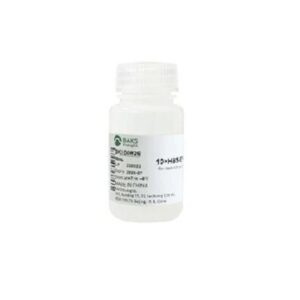
PBMC Cryopreservation and Thawing with CS-PM-D1
CS-PM-D1 PBMC Cryopreservation Solution helps reduce post-thaw cell aggregation while supporting PBMC viability, recovery, and workflow consistency.

Supporting Reliable NK Cell Manufacturing from Seed Cell Banking to Final Product Cryopreservation
Large-scale NK cell manufacturing requires reliable control across multiple critical steps, including seed cell cryopreservation, post-thaw recovery, NK cell expansion, batch processing, high-density freezing, and preservation of biological activity after thawing.
During industrial-scale NK cell production, several challenges can directly affect final product quality and manufacturing consistency. Common issues include unstable recovery and expansion of thawed seed cells, cell damage caused by prolonged exposure to cryoprotectants during batch dispensing, reduced viability during high-density cryopreservation, and loss of post-thaw NK cell cytotoxicity.
To address these challenges, an integrated NK cell manufacturing workflow combines seed cell cryopreservation, large-scale NK cell expansion, and high-density final product cryopreservation into a more streamlined production process.
The workflow includes:
Together, these products provide a full-process solution from seed cell banking to finished NK cell preparation.
Challenges in Large-Scale NK Cell Manufacturing
NK cell therapies and research applications increasingly require scalable and reproducible manufacturing processes. However, expansion performance alone is not sufficient.
An effective NK cell manufacturing workflow must maintain:
Cryopreservation is particularly important because both upstream seed cells and downstream NK cell products may need to be stored, transported, or processed before further use.
The cryopreservation medium therefore needs to support not only cell survival during freezing and thawing, but also the practical requirements of real-world manufacturing workflows.
Integrated NK Cell Manufacturing Workflow
1. PBMC and CBMC Seed Cell Cryopreservation
Reliable NK cell manufacturing begins with a stable source of seed cells.
CS-PM-D1 Cryopreservation Medium is designed for the cryopreservation of PBMC and CBMC seed cells, supporting the establishment and long-term maintenance of seed cell banks.
After thawing, preserved seed cells can be transferred directly into the NK cell expansion process.
Stable seed cell preservation helps reduce variability between manufacturing batches and provides a more consistent starting point for downstream NK cell production.
2. Large-Scale NK Cell Expansion with NK Cell Culture Kit 2.0
Following thawing, CBMC or PBMC seed cells are expanded using the NK Cell Culture Kit 2.0.
The NK 2.0 expansion system is designed to support efficient expansion of highly active NK cells while maintaining the characteristics required for downstream cell preparation.
In previous evaluations, CBMC seed cells processed through this workflow demonstrated stable expansion performance and generated highly active NK cells suitable for large-scale cell production and research applications.
For larger-volume production, the expansion process can be combined with AirLite Cell Culture Bags and NeoPL™ M-Boost Human Platelet Lysate to support scalable manufacturing workflows.
High-Density NK Cell Cryopreservation at 1 × 10⁸ Cells/mL
High-density cryopreservation represents one of the most challenging stages in NK cell manufacturing.
As cell concentration increases, cryoprotectant exposure, osmotic stress, freezing conditions, and processing time may have a greater impact on post-thaw viability and recovery.
To evaluate the performance of CS-AT-D2 Cryopreservation Medium under manufacturing-relevant conditions, a comparative cryopreservation study was conducted using CS-AT-D2 and CS10.
Experimental Conditions
NK cell density:
1.0 × 10⁸ cells/mL
Cryopreservation formulations:
50% CS-AT-D2 versus 50% CS10
Processing temperature:
2–8°C
Storage condition:
-80°C
Cryoprotectant exposure time before freezing:
These conditions were designed to evaluate the effect of extended cryopreservation-medium exposure during batch preparation and dispensing.
Post-Thaw NK Cell Viability
Under the 0-hour and 2-hour exposure conditions, post-thaw NK cell viability was comparable between the CS-AT-D2 and CS10 groups.
However, following 6 hours of exposure at 2–8°C, NK cells preserved with CS-AT-D2 demonstrated higher post-thaw cell survival than cells in the CS10 comparison group.

This result is particularly relevant to industrial NK cell manufacturing workflows.
During large-scale batch dispensing, filling, or preparation, cells may remain in contact with cryopreservation medium for extended periods before the freezing process is completed.
Improved tolerance to prolonged exposure may therefore help reduce cell loss and improve manufacturing consistency.
Viable Cell Recovery: 90% After 6-Hour Processing Exposure
Viable cell recovery is another critical parameter in NK cell cryopreservation.
For short exposure periods of 0 and 2 hours, the viable cell recovery rates of the two cryopreservation groups were similar.

After 6 hours of exposure, however, a clear difference was observed.
| Cryopreservation Medium | Viable Cell Recovery After 6 Hours |
| CS-AT-D2 | 90% |
| CS10 | 70% |
The CS-AT-D2 group achieved approximately 90% viable NK cell recovery, compared with approximately 70% in the CS10 group.
This performance indicates that CS-AT-D2 may offer greater tolerance to extended batch-processing conditions, helping minimize cell loss during large-scale NK cell preparation and dispensing.
For industrial production, this processing flexibility can be particularly valuable when multiple product units must be filled or prepared within the same manufacturing batch.
Preservation of Post-Thaw NK Cell Cytotoxicity
Maintaining viable cells after freezing is only part of successful NK cell cryopreservation.
The biological function of the NK cells must also be preserved.
NK cell cytotoxicity was therefore evaluated immediately after thawing following three weeks of cryopreservation.

At effector-to-target ratios of:
NK cells preserved using CS-AT-D2 demonstrated killing activity comparable to fresh NK cells.
Overall cytotoxic performance was also higher than that observed in the CS10 comparison group.
These results indicate that CS-AT-D2 can help preserve not only post-thaw NK cell viability and recovery, but also the functional activity required for downstream NK cell applications.
Why Processing Time Matters in NK Cell Cryopreservation
In laboratory-scale experiments, cells can often be mixed with cryopreservation medium and frozen immediately.
Industrial manufacturing is different.
Large batches may require substantial time for:
As a result, some cells may remain in contact with cryoprotective formulations for several hours before freezing.
Cryopreservation media that maintain cell viability and recovery during these extended processing periods may therefore provide an important manufacturing advantage.
The 6-hour exposure results demonstrate the potential value of CS-AT-D2 in production workflows where delayed dispensing or long batch-processing times cannot always be avoided.
Complete NK Cell Manufacturing Product Portfolio
The integrated NK cell production solution covers multiple stages of the manufacturing workflow.
| Product | Catalog No. | Primary Application |
| PBMC Cryopreservation Medium | CS-PM-D1 | Cryopreservation of PBMC and CBMC seed cells |
| NK Cell Culture Kit 2.0 | CS-NK-K2 | NK cell activation and large-scale expansion |
| AirLite Cell Culture Bag | CS-AL-01 | Scalable NK cell culture and expansion |
| Human Platelet Lysate | NeoPL™ M-Boost | Cell culture supplementation |
| Immune Cell Cryopreservation Medium | CS-AT-D2 | High-density NK cell cryopreservation and final product storage |
From Seed Banking to Finished NK Cell Products
The complete workflow is designed to support the major stages of NK cell manufacturing:
PBMC / CBMC Seed Cells
↓
CS-PM-D1 Seed Cell Cryopreservation
↓
Seed Cell Thawing
↓
NK Cell Culture Kit 2.0 Expansion
↓
AirLite Cell Culture Bag + NeoPL™ M-Boost
↓
Large-Scale NK Cell Production
↓
CS-AT-D2 High-Density Cryopreservation
↓
Finished Cryopreserved NK Cell Product
By integrating compatible products across multiple production stages, the workflow reduces the need to source and optimize independent reagents from multiple suppliers.
This can help simplify process development, reduce reagent compatibility testing, and improve manufacturing consistency.
Applications
The integrated NK cell manufacturing and cryopreservation workflow is suitable for organizations working in areas such as:
The system is designed to support research laboratories, biotechnology companies, cell-processing facilities, and organizations developing scalable immune-cell manufacturing processes.
Frequently Asked Questions About NK Cell Cryopreservation
What cell density can be used for NK cell cryopreservation?
In the evaluation described above, NK cells were cryopreserved at a density of 1.0 × 10⁸ cells/mL, representing a high-density cryopreservation condition relevant to large-scale cell preparation.
Does prolonged exposure to cryopreservation medium affect NK cells?
Extended exposure to cryoprotective formulations may reduce cell viability and recovery.
In the comparative study described above, NK cells exposed to the cryopreservation formulations for six hours showed approximately 90% viable cell recovery with CS-AT-D2, compared with approximately 70% with CS10.
Can NK cells maintain cytotoxicity after cryopreservation?
Yes. In this evaluation, NK cells preserved with CS-AT-D2 maintained cytotoxic activity comparable to fresh cells at E ratios of 10:1 and 5:1 following three weeks of cryopreservation.
Can PBMC and CBMC seed cells be cryopreserved before NK cell expansion?
Yes. PBMC and CBMC seed cells can be cryopreserved before expansion. CS-PM-D1 is designed for seed cell cryopreservation and can be integrated with the NK Cell Culture Kit 2.0 for downstream NK cell expansion.
Why is viable cell recovery important?
Cell viability measures the percentage of surviving cells in a sample, while viable cell recovery reflects how many viable cells remain compared with the number originally frozen.
For manufacturing applications, high viable cell recovery is important because cell loss can directly affect final product yield and manufacturing efficiency.
Build a More Consistent NK Cell Manufacturing Workflow
From seed cell banking and NK cell expansion to high-density final product cryopreservation, an integrated workflow can help simplify process development and improve production consistency.
The combination of CS-PM-D1, NK Cell Culture Kit 2.0, AirLite Cell Culture Bags, NeoPL™ M-Boost, and CS-AT-D2 provides a coordinated solution covering multiple critical stages of NK cell manufacturing.
For additional technical information, product specifications, application data, or purchasing inquiries, please contact Vision4Vita/Cellstore.